
daily-reflection
Habit Tracker App, Paper, or Year View: Which Fits?
by David Langley8 min read
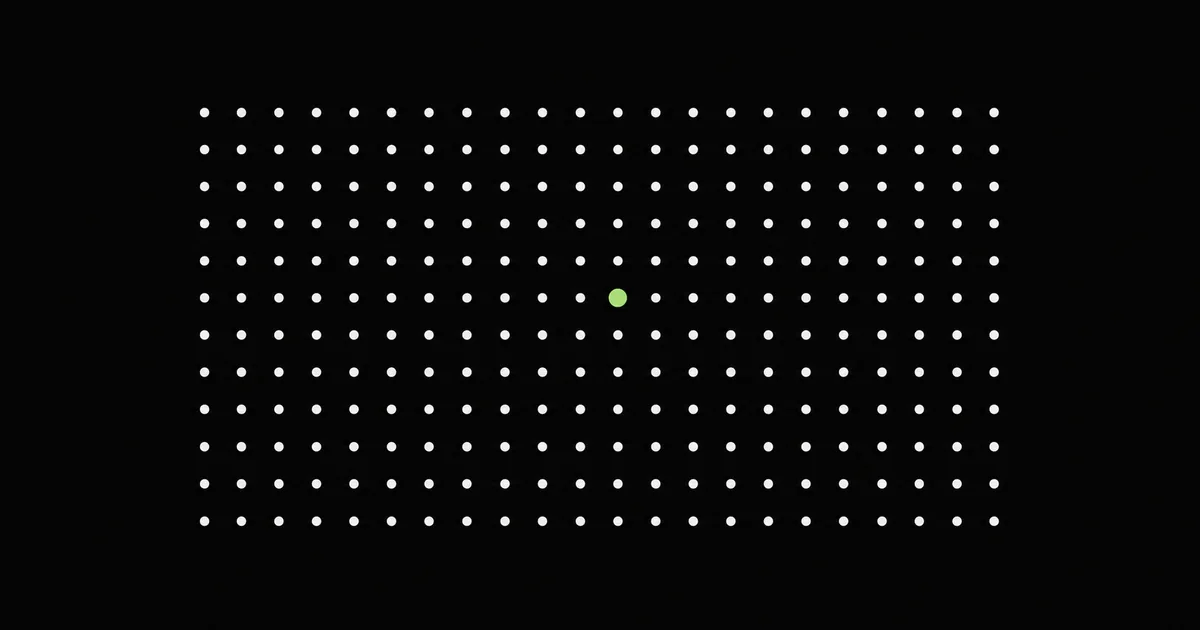
The right habit tracker app—or paper alternative—depends on the record you need to see, not on feature count. Paper calendars fit one clear yes/no habit you want on a wall. Checkbox apps fit several named routines you want to log in seconds. Year-view reflection fits people who care more about what each day felt like than about perfect completion.
The fit fails when you need a behavior record and buy a guilt machine instead. Self-monitoring can help change behavior; however, it works as a feedback tool, not as a moral scoreboard. A review of behavior-change techniques found self-monitoring among the methods that support change, without treating any single format as mandatory for everyone (Michie et al., Annals of Behavioral Medicine).
What you are choosing when you choose a tracker
Choosing a habit tracker means choosing three things at once:
- The record: boxes, dates, scores, notes, or a year map.
- The daily cost: seconds of tapping, a wall mark, or a short written check-in.
- The meaning of a miss: empty cell, broken streak, or just a quieter day.
If you ignore those three, you will optimize for novelty. A pretty app that asks for twelve habits and a streak badge will feel productive for a week, then heavy. A blank wall calendar will feel honest on day one and incomplete if you actually need notes.
The three main records people actually use
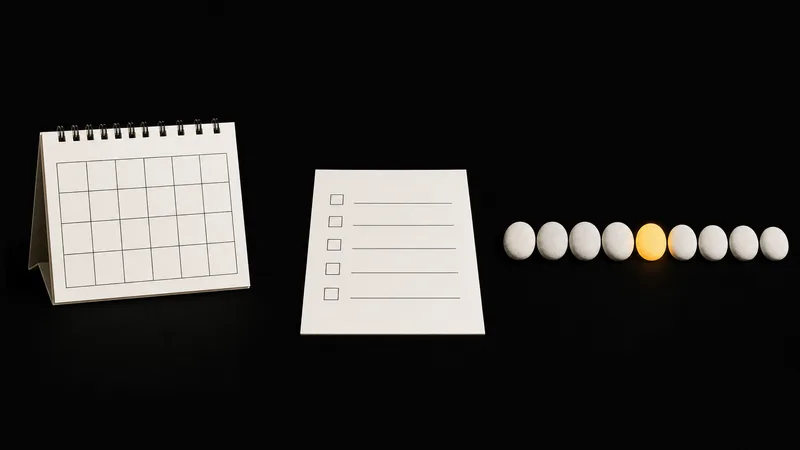
Most people land on one of three habit-tracking records: paper marks, checkbox logs, or a year-view reflection map. The trade-off is visibility and simplicity versus searchability and nuance.
Paper calendar or wall chart
A paper calendar or wall chart works when you mark a day only after you did the thing. The record is visual and local. You see last month at a glance if the page is still on the fridge.
Best when: you track one or two binary habits (walked, wrote, no alcohol). You want the mark to stay in your physical space. You prefer zero notifications.
Daily effort: low, if the calendar is visible. High friction if the pen lives in another room.
What a missed day means: an empty square. That emptiness is useful only if you treat it as data. If you treat it as failure, the same blank square becomes a reason to quit.
Limits: hard to search later. Weak for mood or narrative. Travel breaks the ritual unless you carry a notebook version.
Checkbox habit apps
Checkbox habit apps let you name habits, set targets, and tick boxes. The record is completion over time, often with charts and reminders.
Best when: you run a small set of specific routines and want fast logging. You care about counts this week or this month more than how a single day felt.
Daily effort: very low per habit if the list is short. Grows fast as you add more rows.
What a missed day means: often a broken streak or a red cell. That design can keep you honest. It can also train you to protect the number instead of the habit. If streak pressure is already warping your days, read why "never miss twice" is not a two-day law before you double down on streak-first tools.
Limits: multi-habit checklists encourage feature bloat. You can spend more energy maintaining the list than living the routine. Most apps answer "did you do it?" and stay quiet on "what was the day like?"
Year-view reflection
Year-view reflection keeps a day-linked note of what stood out, not a matrix of habit names. The record is a year map plus short text and mood signals over time.
Best when: you want to see the shape of a year, not prove perfect compliance. You already know the habits you care about, or you care more about memory and pattern than about boxes.
Daily effort: one short check-in if the format stays tight. Feels heavy if you write essays every night.
What a missed day means: a gap in the year, not a public failure score. You can resume without "repairing" a chain.
Limits: weaker if your only goal is strict yes/no compliance for many behaviors. You still need a separate checklist if you manage ten named habits with different frequencies.
Fit matrix: record, effort, and a miss
The fit matrix below matches what you need to see with a preferred record, daily effort, and how a miss usually looks.
| You need to see… | Prefer | Daily effort | A miss usually looks like |
|---|---|---|---|
| One habit on a wall | Paper calendar | One mark | Empty square |
| Several named routines | Checkbox app | Taps per habit | Unticked row, often a streak hit |
| How the year felt and what you noted | Year-view reflection | One short check-in | Blank day on a year map |
| Counts without self-attack | Any tool with soft rules | Same as above | Data, not a verdict |
Use the matrix as a filter, not a personality test. You can mix tools. Many people keep one paper mark for exercise and a separate year log for memory. Mixing fails when every tool demands a perfect daily ceremony.
How long until a routine feels automatic
Habit-formation research does not hand you a universal deadline. In a study of people who adopted a new daily behavior in a stable context, the time to reach a plateau of automaticity varied widely across individuals and behaviors, with a median around two months and a range that stretched much longer for some people (Lally et al., European Journal of Social Psychology).
That finding argues against tools that treat day 21 or day 30 as a finish line. Automaticity is uneven. A tracker that shames early misses confuses a normal learning curve with character failure. Design for re-entry: you miss, you note what got in the way, you continue. One caveat: if productivity shame is already loud, check the scale before you add more targets. Start with the denominator, not another checklist.
A simple chooser you can run in five minutes
This five-minute chooser works top to bottom. Stop at the first clean yes.
1. Is the goal mostly "did I do this specific thing?"
Yes, and it is one or two habits → paper calendar or a single-habit checkbox.
Yes, and it is several named habits with different days → checkbox app with a short list. Cap the list. If you cannot name why each row exists, delete it.
2. Is the goal mostly "what happened in my days this year?"
Yes → year-view reflection. Keep the daily write short so you still open it on ordinary Tuesdays.
3. Do streaks motivate you, or do they make you game the system?
Motivate → a streak-friendly checkbox tool can stay.
Game or panic → turn streaks off if the app allows, or pick a format where a miss is a gap, not a broken identity.
4. Will you open this when you are tired?
If no, cut scope until the answer is yes. The best record is the one you still keep in week eight.
5. Can you explain the rule for a miss in one sentence you still respect when you are tired?
Examples that work: "Empty square means I did not walk." "Gap means I skipped the check-in; I write tomorrow."
Rules that fail: "Any miss means I am back at zero as a person."
Where most advice goes wrong
Habit-tracker advice often ranks apps by feature count. More reminders, more social layers, more analytics. That ranking answers "what can this product do?" It does not answer "what do you need to see?"
Feature bloat creates a second job: system maintenance. You rename habits, retune notifications, and chase perfect charts. The habit itself becomes secondary.
Streak culture creates a third job: image protection. You protect the chain after the behavior already served you. When the chain becomes the product, a single hard day can wipe months of honest effort in your mind, even if the real life pattern is still fine.
The sharper alternative is boring: choose the smallest record that still answers your question, and write down what a miss means before you install anything.
Edge cases that change the pick
These edge cases change which habit tracker fits:
- You share space with kids or roommates. A wall calendar can create social accountability without an account. It can also invite commentary you do not want. Privacy favors a personal phone log.
- You travel constantly. Paper on the wall fails. A phone checkbox or year log travels with you.
- You are rebuilding after burnout. Prefer low daily cost and soft miss rules. Skip multi-habit dashboards until one routine is stable.
- You need clinical care. A consumer tracker is not treatment and does not diagnose a condition. Use clinical support for that. Keep personal logs for memory and pattern only.
- You want mid-year sense-making. A year map plus notes is easier to scan than twelve monthly checkbox exports. For a practical review pass, use a mid-year review from what you already recorded.
If you want a year map instead of a checklist
If you want a year map instead of a multi-habit checklist, match the product to that category after you pick it. One Percent is not a multi-habit checkbox grid. It is a year-grid reflection record.
One Percent turns the year into a 365-dot view. You capture a short daily highlight and lowlight. The app shows daily notes and mood over time, and provides iPhone widgets so the year stays visible without opening a heavy dashboard. That package fits people who want memory and pattern, not streak theater.
You still need a separate paper mark or checkbox list if your real problem is logging eight named routines. Do not force a reflection year map to pretend it is a compliance spreadsheet.
If the year-view path matches what you need to see, view One Percent on the App Store. For more guides on gentle self-monitoring, browse the One Percent guides.
FAQ
Do I need an app, or is paper enough?
Paper is enough when the habit is simple, the mark is visible, and you do not need search or long-range narrative. Switch to an app when travel, multi-habit timing, or year-scale review makes paper hard to keep honest.
Is a habit tracker without streaks better?
A habit tracker without streaks is better for you if streaks make you hide, quit, or fake check-ins. It is worse if a visible chain is the only cue that still gets you started. Prefer tools that let you disable streaks, or formats where a miss is simply missing data.
Can I use more than one method?
You can use more than one method if each owns a different question. Example: wall X for exercise, year dots for memory. Skip dual systems if every tool demands a full evening review. Two light systems beat one overloaded system.
What should I track first if I am overwhelmed?
If you are overwhelmed, track the behavior that removes friction from the rest of the day, or the one you already almost do. One clear record beats five half-kept lists. Expand only after the first record feels automatic enough that logging is not a debate.
The app behind the dots
One Percent.
One Percent turns the year into a 365-dot view. One Percent records a short daily highlight and lowlight. One Percent shows daily notes and mood over time. One Percent provides iPhone widgets.