
consistency
30 Realistic 365 Day Challenge Ideas for a Year You Can Keep
by Alexander Vaughn14 min read
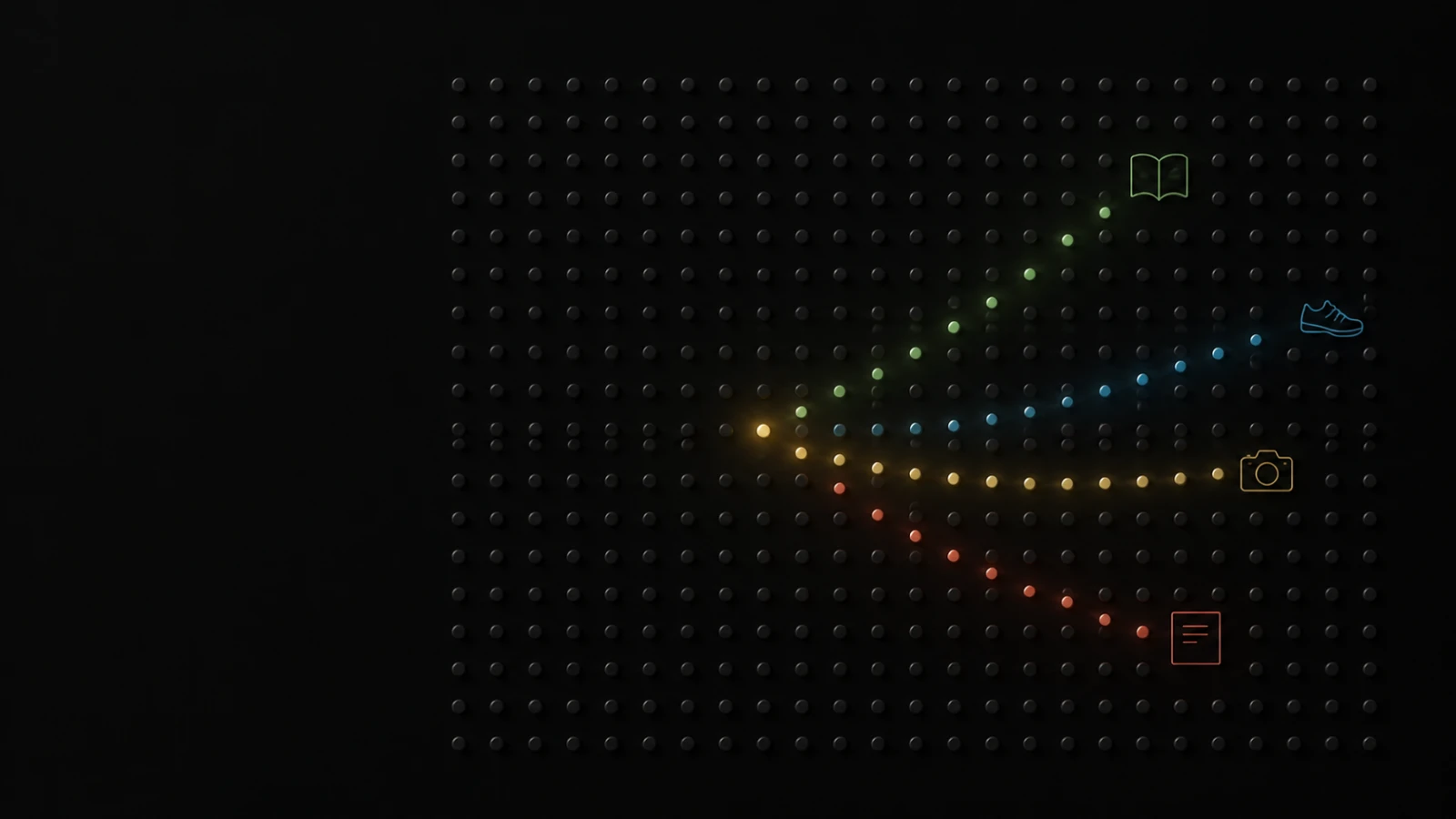
One Percent: 1% Better a Day gives you a 365-dot view for remembering the year without turning every day into a performance score. The best 365 day challenge is small enough to repeat on an ordinary Tuesday, flexible enough to survive travel or illness, and meaningful enough that you still care after the novelty disappears.
Start with one action and a minimum version. Decide what you will record, what happens when you miss a day and when you will review the pattern. You do not need to wait for January 1. A rolling year that begins today still gives you 365 chances to notice a direction.
Choose your 365 day challenge in one minute
Pick the row that matches what you want to preserve:
| If you want to preserve | Try this minimum action | Record this |
|---|---|---|
| memories | write one sentence | one detail you would otherwise forget |
| reading | read one page | title and one line |
| movement | take a short walk | route or minutes, without grading intensity |
| creativity | make one tiny sketch | subject or material |
| connection | send one sincere message | who you contacted |
| learning | explain one idea in plain words | the question you answered |
| your surroundings | take one intentional photo | place and reason |
| practical progress | complete one two-minute reset | what became easier tomorrow |
If two ideas appeal to you, choose the one you can perform with the least setup. Save the second idea for a later season instead of starting two year-long obligations at once.
365 day reflection challenge ideas
1. one line about the day
Write one sentence that only you could have written: what you noticed, heard, decided or changed. Skip the summary when a specific image tells the truth better.
Minimum version: five words.
2. one highlight and one lowlight
Name one moment that felt welcome and one that felt difficult. Do not force balance. Some days hold two quiet details, and some hold a clear contrast.
Minimum version: one word in each field.
3. one question you carried
Record a question instead of demanding an answer. At the end of the month, review which questions disappeared, changed shape or still deserve action.
Minimum version: one question mark in the daily note.
4. one choice you made
Write one decision, including tiny choices such as leaving early, cooking at home or asking for clarification. The record shows where you exercised agency without claiming that every choice was optimal.
Minimum version: “I chose…”
5. one sensory detail
Capture a color, sound, smell, taste or texture. This challenge works when you want a memory record without turning the entry into self-analysis.
Minimum version: one concrete noun and one adjective.
Read the one-line-a-day journal guide when you want a low-friction format, or use the daily reflection questions when the blank page still feels too broad.
365 day creative challenge ideas
6. one tiny sketch
Draw an object in front of you. Give yourself a small box and stop when the box fills. You are collecting observations, not building a daily portfolio.
Minimum version: one continuous line.
7. one intentional photograph
Take one photo because you want to remember the light, place, person or object. Do not turn the challenge into an obligation to publish. Private photographs can remain a more honest record.
Minimum version: one frame, no editing.
8. one color from the day
Choose a color that appeared somewhere specific. Save the color beside the source: rust from a gate, blue from a cup or green from the bus seat. The color does not need to diagnose your mood.
Minimum version: a named color.
9. one paragraph of fiction
Continue one story or write a self-contained scene. Stop while you know what comes next. The tiny boundary can make tomorrow’s return easier.
Minimum version: one sentence of action.
10. one sound recording
Record ten seconds of a place when you have permission and the recording does not expose someone’s private conversation. Label the place so the file remains meaningful later.
Minimum version: describe the sound in text when recording would intrude.
365 day learning challenge ideas
11. explain one idea simply
Choose one concept from work, a book or a course. Explain it without jargon as if you were answering a thoughtful beginner.
Minimum version: one sentence beginning with “This means…”
12. learn one word in another language
Choose words you can use in a sentence. Review old words alongside new ones so the challenge includes retrieval, not only collection.
Minimum version: say yesterday’s word before adding today’s.
13. solve one small problem
Complete one exercise in mathematics, programming, logic or another skill. Choose a level that lets you reason instead of racing through a daily checkbox.
Minimum version: write the first step and return later.
14. read one page with attention
Read a single page and capture one line in your own words. If you continue, treat the extra pages as optional rather than raising tomorrow’s minimum.
Minimum version: one paragraph.
15. ask one better question
Take a vague question and make it answerable. Replace “How do I improve?” with “Where did I stop during the last attempt, and what information was missing?”
Minimum version: rewrite one question.
365 day movement challenge ideas
Choose movement that fits your current health, ability and qualified medical guidance. A year-long challenge should not pressure you to continue through pain, illness or an injury.
16. walk outside
Take a short walk and notice the route. The World Health Organization counts walking as physical activity and emphasizes that some activity is better than none, but you should adapt type and amount to your circumstances.
Minimum version: step outside or move safely indoors when weather, access or health changes the plan.
17. perform one mobility sequence
Choose a gentle, familiar sequence that a qualified professional has cleared when you need that guidance. Record what you did, not a promise that it fixed pain or posture.
Minimum version: one comfortable movement.
18. take one movement break
Stand, walk or change position during a long sedentary block. Attach the break to a cue you already encounter, such as closing a meeting or making tea.
Minimum version: one deliberate change of position.
19. practice one balance or coordination drill
Use a safe setup with support available. Stop if you feel pain, dizziness or instability. Choose a seated coordination drill when standing balance does not fit you.
Minimum version: one controlled repetition.
20. record one thing your body let you do
Describe an action without scoring appearance or worth: carried groceries, climbed stairs, rested when needed or played with a child. Keep the language factual.
Minimum version: one verb.
365 day connection challenge ideas
21. send one sincere message
Thank someone, check in or share a specific memory. Do not demand an immediate reply. The action belongs to you; the response belongs to the other person.
Minimum version: draft the message and send it when the timing respects the relationship.
22. ask one real question
Replace “How are you?” with a question connected to something the person mentioned before. Listen without turning the answer into your own story.
Minimum version: ask one follow-up during a conversation already happening.
23. record one act of help
Notice help you gave or received. Keep the record private when it involves someone else’s vulnerable moment.
Minimum version: “gave,” “received” or “asked.”
24. learn one name or detail
Remember the name of someone you see regularly, or one detail they freely shared. The goal is attention, not collecting personal information.
Minimum version: use the person’s name respectfully in the next conversation.
25. share one useful thing
Send a resource only when it fits the other person’s stated need. Add one sentence explaining why you thought of them.
Minimum version: save the resource for a more appropriate moment.
365 day practical-life challenge ideas
26. complete one two-minute reset
Clear one surface, prepare tomorrow’s bag, file one document or put one object back where you will need it. Stop after the small reset when continuing would make the ritual harder to repeat.
Minimum version: return one object.
27. remove one source of friction
Fix a repeated annoyance: label a cable, move the charger, save the correct link or write the missing instruction. Choose friction you can actually control.
Minimum version: name the friction and its next action.
28. use one thing you already own
Cook from the cupboard, wear something overlooked, read a book you own or repair an item. Avoid turning the challenge into pressure to use unsafe, expired or unwanted things.
Minimum version: notice one useful item before buying a replacement.
29. spend one minute preparing tomorrow
Choose the first action, open the document or place the equipment where you will begin. Preparation should make tomorrow clearer, not expand into a full planning ritual.
Minimum version: write the first verb.
30. close one open loop
Reply, schedule, archive, decline or decide the next step for one item that keeps returning to your attention.
Minimum version: write who owns the next action.
how to design a challenge you can return to
Write five rules before day one:
- The action: what you will do in plain language.
- The minimum: the smallest version that still counts as contact with the intention.
- The evidence: the note, dot, photo or object you will keep.
- The interruption rule: what you will do after travel, illness, caregiving or a forgotten day.
- The review: when you will look at the pattern and decide whether to continue, change or stop.
Do not use a minimum to pressure yourself through a situation that calls for rest or help. A minimum removes unnecessary setup. It does not override health, safety or the needs of someone who depends on you.
Research on habit formation does not support one universal completion date. A widely cited prospective study by Lally and colleagues found substantial variation in how automaticity developed across people and behaviors. Read the study in the European Journal of Social Psychology and treat a year as a container for observation, not a guarantee that repetition will become effortless.
what to do when you miss a day
Do not create a fake entry to protect the streak. Choose one of three honest responses:
- leave the day empty;
- add what you remember later and label it as a later entry;
- write why the action did not fit and continue with the next day.
A missed day does not erase earlier repetitions. The never miss twice guide explains why the phrase works better as a prompt to notice a pattern than as a rigid two-day law.
If the challenge keeps producing guilt, avoidance or unsafe behavior, change it or stop it. The challenge serves your attention. You do not serve the challenge.
plan the challenge before you commit
Use the free 365 Day Challenge Planner to filter ideas by time, setting and the kind of record you want. It generates a minimum version, interruption rule and weekly review that you can copy.
Then open One Percent: 1% Better a Day. The app turns the year into a 365-dot view, records a short daily highlight and lowlight, shows daily notes and mood over time and provides iPhone widgets. Add one factual note about the challenge after you have received the day’s value. The app records what you enter; it does not calculate whether you became one percent better or guarantee that the challenge changes your life.
frequently asked questions
do I need to start a 365 day challenge on January 1?
No. Start a rolling 365-day period today, or choose an end date that matters to you. A calendar-year grid feels intuitive, but the action does not depend on New Year’s Day.
what is the easiest 365 day challenge?
The easiest challenge requires almost no setup and produces a record you value. One sentence, one intentional photo, one page or one two-minute reset can all work. Choose the action that fits your ordinary day.
should I catch up after missing days?
Catch up only when you can reconstruct the entry honestly and the extra work helps. Otherwise, leave the gap and continue. A truthful incomplete record gives you more information than a perfect-looking reconstruction.
can I do more than one year-long challenge?
You can, but each challenge adds setup and review. Start with one for several weeks. Add another only when the first action fits without crowding out rest, relationships or necessary work.
how do I track a 365 day challenge without a streak?
Use dated notes, a jar, a paper calendar or a 365-dot year view. Let a blank day remain blank. Review the whole pattern instead of asking one chain to prove your consistency.
is a 365 day challenge good for mental health?
Do not treat a challenge as mental-health treatment, diagnosis or a guaranteed way to feel better. Choose a gentle activity if you enjoy it, and contact a qualified professional when you need mental-health support.
sources
The app behind the dots
One Percent.
One Percent turns the year into a 365-dot view. One Percent records a short daily highlight and lowlight. One Percent shows daily notes and mood over time. One Percent provides iPhone widgets.