
reflection
Answer 30 Quarterly Reflection Questions in One Hour
by Hannah Whitfield9 min read
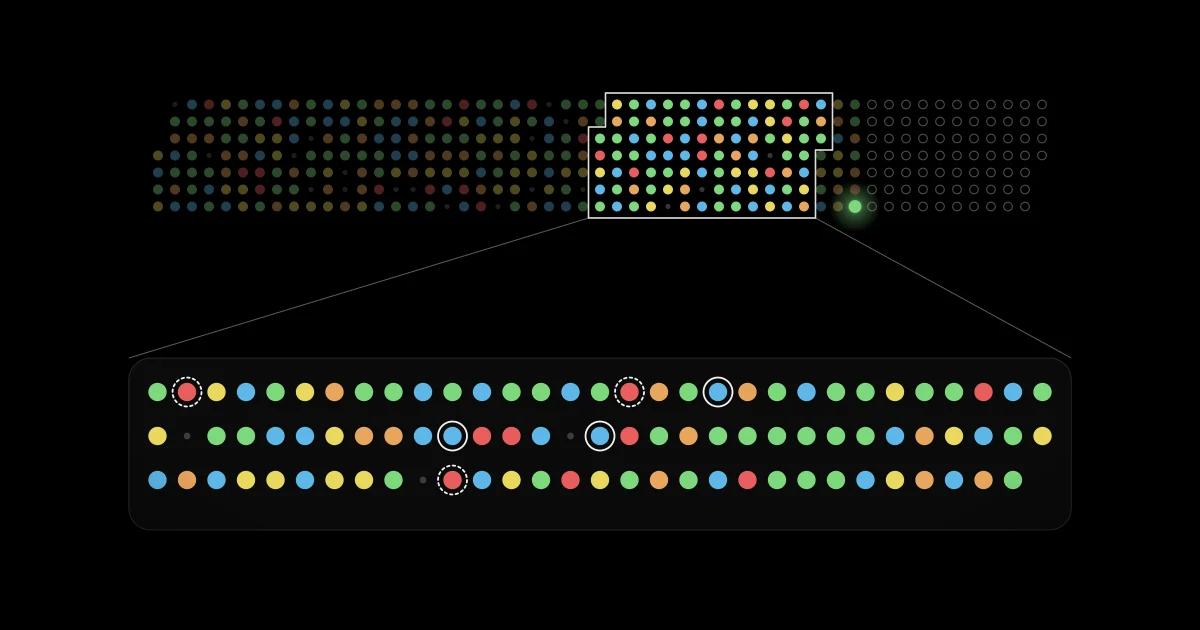
Quarterly reflection questions help you review the last 13 weeks while you still remember the details: what happened, what repeated, which habit held and what you want from the next 90 days. Set aside one hour, reread what you recorded, answer the questions below with dates and examples, and leave with one habit to keep and one change to test.
A quarter sits between your monthly reflection questions and a full year review. A month often feels too short to show a pattern, and a year feels too long to remember. Thirteen weeks gives you enough evidence to spot repetition and enough memory to explain it.
Run your quarterly review in one hour
Book one hour in the first week of the new quarter. Use the same chair, the same notebook and the same order of steps every time, so the review gets faster each round.
| Minutes | Step | What you leave with |
|---|---|---|
| 0 to 10 | Gather the record: journal, calendar, photos, notes, any recaps | One pile of evidence for the 13 weeks |
| 10 to 25 | Reread week by week and mark three high points and three low points | Six dated moments |
| 25 to 45 | Answer 10 to 12 questions from the list below | A written page of answers |
| 45 to 55 | Choose one habit to keep and one change to test, then write an if-then plan for each | Two plans for the next 90 days |
| 55 to 60 | Put the next review on your calendar | A date 13 weeks out |
Do the reading before the writing. If you answer from memory first, the loudest week of the quarter writes your summary for you.
Why a quarter makes a good review window
It gives a habit time to show its shape. In a study led by Phillippa Lally, 96 volunteers repeated one eating, drinking or activity behavior every day in the same context for 12 weeks, about one quarter. The time it took them to reach 95% of their own ceiling of automaticity ranged from 18 to 254 days, and missing one opportunity did not materially affect the process (Lally et al., European Journal of Social Psychology). One quarter rarely finishes a habit. It does show you whether the habit started to stick.
It turns tracking into progress monitoring. A meta-analysis of 138 studies with 19,951 participants found that interventions that helped people monitor goal progress promoted goal attainment. The effect grew when people reported their outcomes or made them public, and when they physically recorded the information (Harkin et al., Psychological Bulletin). Write your answers down. Say one of them out loud to a friend.
It fits the calendar. Each quarter holds about 13 weeks, so your review lands on the same rhythm every year:
| Quarter | Dates | Days |
|---|---|---|
| Q1 | January 1 to March 31 | 90, or 91 in a leap year |
| Q2 | April 1 to June 30 | 91 |
| Q3 | July 1 to September 30 | 92 |
| Q4 | October 1 to December 31 | 92 |
On a life in weeks calendar, one quarter covers 13 boxes, a quarter of one row. Seeing those 13 boxes next to the rest of the grid helps you pick what deserves the next 13.
30 quarterly reflection questions
Pick 10 to 12 questions per review. Answer each one with a date, a name or a number. Leave a question blank when your record cannot answer it, and write "unknown" beside it.
Look back at the 13 weeks
- Which three moments from this quarter do I want to remember in ten years?
- What did I finish, ship, send, repair or decide?
- Which week felt the best, and what happened in it?
- Which week felt the worst, and what happened in it?
- What surprised me?
- What took more time than I planned?
Find what repeated
- Which word, person or place shows up again and again in my notes?
- Which problem came back more than twice?
- What did I postpone every week?
- When did my mood drop, and what came right before it?
- When did my energy rise, and what came right before it?
- Which small action kept paying off?
Check your habits and energy
- Which habit did I keep on most days, and what made it easy?
- Which habit fell apart, and in which week?
- How did I sleep across the quarter compared with the one before?
- When I missed a day, how fast did I come back?
- Which habit would I drop if I could keep only one?
- What do I do now without thinking that I had to push myself to do 13 weeks ago?
Review people and places
- Who gave me energy this quarter?
- Who did I mean to call and never did?
- Which conversation changed my mind?
- Where did I spend my best hours?
- Which place do I want to see more of next quarter?
Plan the next 90 days
- What is the one result I want by the last day of next quarter?
- Which habit will I keep, and what will I do when I miss it?
- Which one change will I test, and how will I know it worked?
- What will I stop doing to make room for it?
- Which date next quarter already needs protecting?
- What do I want my next quarterly review to say?
- What will I celebrate, and when?
For question 16, read the never miss twice rule before you judge yourself. For question 25, write the habit into a printable habit tracker and hang it where you will see it.
Turn your answers into two plans
Choose one habit to keep and one change to test. Two plans fit into 13 weeks. Ten plans turn into a list you reread with guilt in the last week of the quarter.
Use the SMART goals template when one of those plans needs a measurable result, a clear owner, and a review date.
Write each plan as an if-then sentence. Researchers call these implementation intentions: plans that name a future situation and the response you will give, such as "If I encounter situation X, then I will respond with action Y." In studies across many fields, these plans have raised goal attainment above goals alone (Saddawi-Konefka et al., Academic Medicine).
| Plan | Weak version | If-then version |
|---|---|---|
| Habit to keep | Keep walking more | If I finish lunch on a workday, then I walk for 15 minutes before I open my laptop |
| Change to test | Spend less time on my phone at night | If it is 10 p.m., then I put my phone on the charger in the kitchen |
| Recovery | Get back on track when I slip | If I miss a walk, then I walk the next day before 9 a.m. |
See one review from start to finish
Say you run your Q3 review on the first Saturday of October. You reread July, August and September and mark three high points: a trip with your sister, a finished course, a calm week in August. You mark three low points: two late work weeks in July and one week of bad sleep in September.
You answer questions 3, 8, 10, 13, 14, 24 and 26. A pattern appears in your notes: your mood dropped after every week with two or more late meetings. Your keeper habit is the lunch walk you logged on most workdays. Your test for Q4 becomes: "If a meeting runs past 7 p.m., then I block the next morning until 10 a.m. for focused work." You put your next review on the first Saturday of January.
Fix the mistakes that ruin a quarterly review
| Mistake | Fix |
|---|---|
| You grade yourself before you describe what happened | Write what happened, with dates, before you write any verdict |
| You answer from memory | Reread the record week by week first |
| You read only the best and worst weeks | Read one ordinary week from each month too |
| You leave with ten new goals | Leave with one habit to keep and one change to test |
| You write the review and never look at it again | Open it on the first day of every month of the next quarter |
| You end without a date | Book the next review before you close your notebook |
If the quarter went badly, keep the review short and descriptive. Answer questions 2, 12 and 24 only. A thin review still beats no record.
Match the review to the quarter
- After Q1 (early April): check whether the resolutions you set in January still matter. Our guide to new year's resolution ideas shows how to keep the ones that do.
- After Q2 (early July): let the quarterly review feed your mid-year review, and read the first half of the year as one story.
- After Q3 (early October): count what is left. The days left in the year counter shows the rest of the year as dots, so you can see what fits before December 31.
- After Q4 (early January): let your four quarterly reviews carry the end of year reflection questions.
Between reviews, keep a lighter weekly rhythm. Five minutes with our weekly reflection questions on Sunday evening gives your next quarterly review 13 short entries to read.
Start your next quarterly review with your own record
The hardest part of a quarterly review comes before the questions: finding what you actually did for 13 weeks. Open One Percent: 1% Better a Day on your iPhone and log a highlight and a lowlight each evening, which takes you less than a minute. One Percent turns your year into a 365-dot grid, and it writes weekly and monthly recaps of your entries right on your iPhone with Apple Intelligence, or with cloud AI when your device cannot run it.
When the quarter ends, read your last three monthly recaps, then scan the quarter's dots before you answer a single question. Log tonight's highlight, so your next review starts with one more day on the record.
Common questions
How often should I do a quarterly review?
Four times a year, in the first week after each quarter ends: early January, April, July and October. Put all four dates on your calendar today.
How long does a quarterly review take?
Plan for one hour: 25 minutes to gather and reread your record, 20 minutes for 10 to 12 questions and 15 minutes to write two plans and book the next review.
What is the difference between a monthly and a quarterly review?
A monthly review helps you remember what happened before the details fade. A quarterly review looks for what repeated across 13 weeks and decides what to keep. Run the monthly review in 20 minutes and the quarterly one in an hour.
What if I did not record anything this quarter?
Use your calendar, your photos and your sent messages as the record, and answer questions 1 to 6 only. Then start one short daily entry today, so next quarter's review has notes to read.
Sources
- Lally, van Jaarsveld, Potts and Wardle. How are habits formed: Modelling habit formation in the real world. European Journal of Social Psychology
- Harkin et al. Does monitoring goal progress promote goal attainment? A meta-analysis of the experimental evidence. Psychological Bulletin, 2016
- Saddawi-Konefka et al. Changing Physician Behavior With Implementation Intentions. Academic Medicine, 2016
The app behind the dots
One Percent.
One Percent turns the year into a 365-dot view. One Percent records a short daily highlight and lowlight. One Percent shows daily notes and mood over time. One Percent provides iPhone widgets.